The first speaker in the 2025/26 series was Arounna Khounnoraj, a Canadian textile artist based in Toronto and co-founder of Bookhou, a multidisciplinary studio and online shop. Her work spans many textile techniques, but the one she has practiced the longest is embroidery.
Textile Art and Embroidery Journey
Arounna shared her journey from childhood embroidery to becoming a textile artist, highlighting her transition from sculpture to textiles during art school. She is self-taught and draws inspiration from her environment and sketches. Arounna discussed her latest project: a second embroidery book with Abrams Publishers featuring abstract botanical designs. She also showcased various embroidery pieces and explained how she combines techniques such as printing and appliqué. During her presentation, Arounna revealed her latest collaboration with Kokka, a Japanese fabric company, resulting in a fabric collection inspired by her embroidery work.
Textile Art and Digital Techniques
Arounna discussed her artistic process, inspired by artists such as Louise Bourgeois and Kiki Smith, and shared her approach to creating textile art using digital tools like Procreate for sketching, emphasizing the importance of daily drawing and maintaining a balance between light and dark elements in her work. Once her designs are created, they are transferred onto fabric. Her preferred methods are using disappearing-ink pens and tracing under the window for precise transfers. Arounna also highlighted the importance of licensing and royalties in her artistic practice and encouraged attendees to explore new techniques and maintain consistent creative work to overcome creative ruts.
Embroidery Techniques and Tools
Arounna demonstrated one of her embroidery techniques, appliqué. While demonstrating, Arounna explained how she uses clamps and stretch frames at home, but relies on Morgan no-slip hoops when travelling due to their tight grip and lack of marking. She shared that she typically uses a few basic stitches, such as split stitch, running stitch, and satin stitch, and often adds a layer of cotton muslin on the back to improve stitching. She generally uses all six strands of stranded cotton on her needle. Arounna also shared her preference for Japanese embroidery needles, noting that they have a sharp point and a flat, round eye, which she purchased during her last trip to Japan.
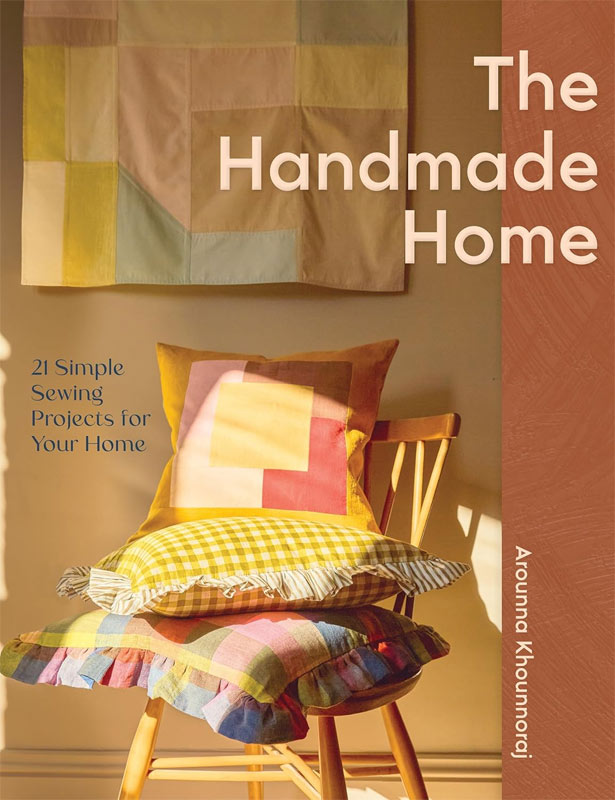
Arounna has written several books, many of which have been translated into multiple languages, and will launch another book, The Handmade Home: 21 Simple Sewing Projects for Your Home, later this year. Arounna’s books are available for purchase at your local bookshop.